
Mary Magdalene is often described as a former prostitute who repented and followed Jesus. The Bible never says this.
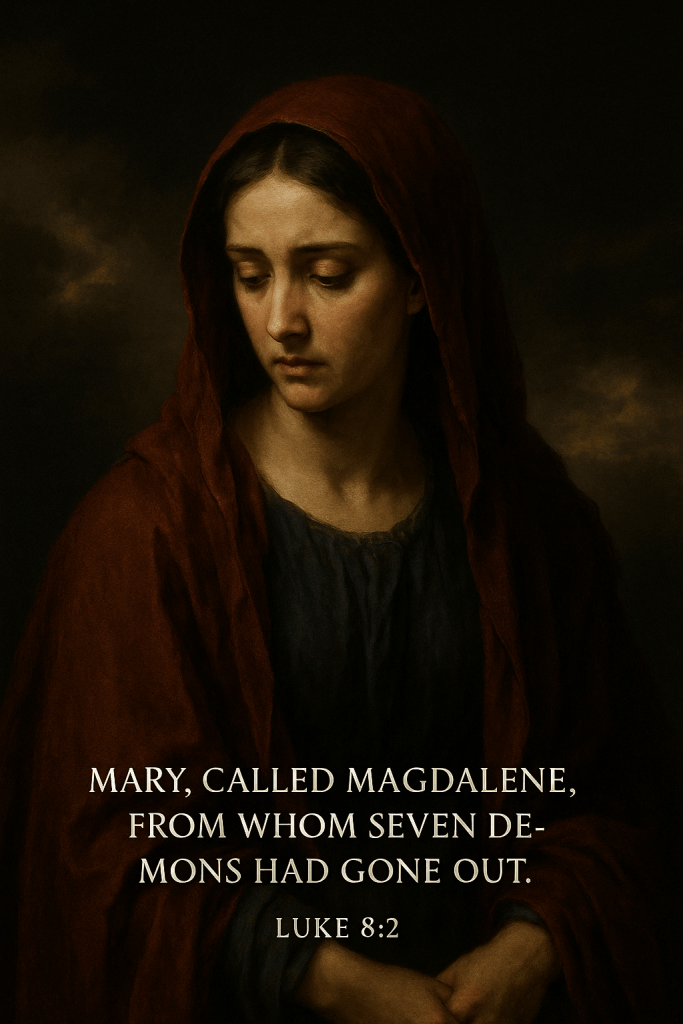
The Gospels introduce her in Luke 8:2 as “Mary, called Magdalene, from whom seven demons had gone out.” That is all. There is no mention of sexual sin or immoral behavior. Her name simply means she came from Magdala, a town on the Sea of Galilee.
The woman who anoints Jesus in Luke 7:36–50 is unnamed. She is called a “sinner” in the text, but the passage does not connect her to Mary Magdalene. Mary of Bethany, the sister of Martha and Lazarus, is also a different person.
The idea that Mary Magdalene was a prostitute began in 591 AD when Pope Gregory I combined these three women into one. His interpretation influenced Western tradition for more than a thousand years but has no basis in the biblical record.
In the Gospels, Mary Magdalene is a committed disciple. She stayed near Jesus during the crucifixion and was the first to see Him after His resurrection. She is a witness and a messenger, not a cautionary tale.
This mistake is a clear example of why personal study matters. Traditions and secondhand claims can distort truth, even when repeated by respected leaders. If you want to know God as He reveals Himself, you must read His word for yourself. When possible, study the original languages—Greek, Hebrew, or Aramaic—so you can see what the text actually says. Pastors and teachers can help guide, but they are not infallible. Truth is found in the Word itself, not in hearsay.
Do not wait for someone else to tell you what it says. Open the Scriptures and see for yourself.

 Faith Recon - Soldiers of Our Shepherd